The Good-Bike Test: Six Railway Stations Ranked by Whether I’d Lock Up and Walk Away
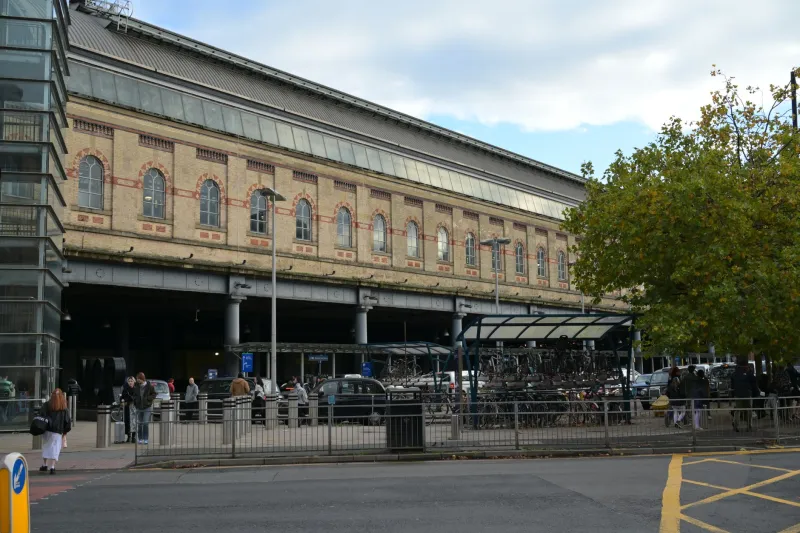
Cycle parking at a railway station is not really a rack. It is a promise: leave your bike here for eight hours and it will still be there, roughly where you left it, with both wheels and a working light. I tested that promise at six major UK stations in autumn 2026. Not with a clipboard and a risk matrix, but with a commuting bike, a decent lock and the sort of low-level dread you get when the train is late and the rack is half empty.
This is not a formal security audit. It is a rider’s audit. I looked at what you actually experience: whether the racks are overlooked or hidden, whether your saddle is going to be wet at 6pm, whether you can find a space at 8:45am, and whether the whole thing feels like a place where a good bike can spend a day without becoming a story.
What I was actually judging
I scored each station on five things. Security meant locks, CCTV, staffing, footfall and whether the racks were in view of people who might intervene or at least remember a van. Weather protection meant covered racks, not a optimistic tarpaulin. Capacity meant whether the station has enough spaces for the people who actually use it, not whether it has a nice artist’s impression on the website. Lighting and access meant whether you would willingly walk to the rack after dark and whether getting in and out is a faff. And nearby alternatives mattered: if the station parking is poor, is there a better place a short ride away?
The final question was simple. Would I leave a good bike here for a full working day? Not a £80 hack. A good bike.
The ranking at a glance
| Rank | Station | Verdict |
|---|---|---|
| 1 | Leeds | Good bike: yes, if you use the secure hub |
| 2 | Manchester Piccadilly | Good bike: yes, with caveats |
| 3 | Edinburgh Waverley | Good bike: probably, but bring a cover |
| 4 | London Waterloo | Good bike: only in the secure options |
| 5 | Bristol Temple Meads | Good bike: I’d think twice |
| 6 | Birmingham New Street | Good bike: ride to Moor Street instead |
1. Leeds: the one that feels like someone thought about it
Leeds wins because it does the unglamorous things properly. The secure cycle hub by the station is the sort of place where you can park a decent commuter bike, tap out, and not spend the day mentally replaying the last time you saw it. Access is controlled, the racks are well lit, and there is enough structure around the place that it does not feel like a corner someone forgot.
Capacity is the weak point. The good spaces go early, and if you arrive after the main commuter wave you may end up in the overflow racks, which are fine but not in the same league. Weather protection inside the hub is decent; the open racks are more exposed. Access is straightforward, though the first visit can feel like you are looking for a side door in a shopping centre.
Verdict: leave the good bike if you have a secure space booked or you are early. If you are rolling in at 9am on a Tuesday with no plan, use the overflow and accept that you are in the beater zone.
2. Manchester Piccadilly: big, busy and mostly credible
Piccadilly has the scale a major commuter station needs. The secure cycle hub is a proper facility, not a token rack behind a bin store. Lighting is good, access is controlled, and there is enough passing traffic that the place does not feel abandoned. For a city-centre station, that matters.
The caveats are capacity and signposting. It fills up, and the difference between the secure hub and the ordinary racks is not always obvious to a first-timer. The ordinary racks are fine for a pub bike; I would not leave a good road bike there all day. Weather protection is patchy depending on where you land.
Verdict: a good bike is reasonable here, but book or arrive early and do not confuse the secure hub with the open racks. If it is full, the nearby alternative is to ride to a smaller station with quieter parking rather than cramming into the first space you see.
3. Edinburgh Waverley: central, lit and slightly exposed
Waverley is a strange one because it feels safer than it looks. The station is busy, the approach is well lit, and there is enough footfall to make the racks feel overlooked rather than hidden. Access is good, and the central location means you are not walking half a mile through a retail park to find your bike.
Weather is the issue. The parking is not as sheltered as you would like in a city that can produce four seasons before lunch. Capacity is decent but not generous, and the open racks are more exposed to wind and rain. I would use a cover, and I would not leave a bike with a lovely leather saddle out in the open for a full day in February.
Verdict: a good bike is probably fine, especially in the more sheltered spots, but this is a station where the weather does as much damage as the thieves. If you are leaving it overnight, look at Haymarket or a proper secure hub instead.
4. London Waterloo: brilliant if you are in the cage, grim if you are not
Waterloo is the UK’s busiest station, and its cycle parking reflects that: lots of it, under pressure, and not all of it equal. The secure cycle facilities are the only places I would leave a good bike for a working day. The open two-tier racks are a numbers game, and a good bike is the prize. Lighting is generally good and access is decent, but the sheer volume of people means the racks get knocked, squeezed and used as a leaning post.
Capacity is the permanent problem. Even with a big secure setup, demand outstrips supply. Weather protection varies wildly. The nearby alternatives are not obvious, which is why so many people take the risk with the open racks. If you are commuting into Waterloo with a decent bike, the honest answer is to use a secure facility or ride to a smaller station on the same line.
Verdict: good bike only with a secure space. Otherwise, bring the beater or ride to the next station.
5. Bristol Temple Meads: decent facility, oversubscribed reality
Temple Meads has improved, but it still feels like a station where cycle parking is a secondary thought that has been retrofitted into awkward spaces. The secure options are worth using, and the lighting around the main racks is acceptable. Access is fine, though the approach can feel scruffy after dark.
Capacity is the killer. The good spaces are oversubscribed, and the overflow puts you in places where I would not leave a decent bike for a full day. Weather protection is mixed. The nearby alternative is to use a smaller station such as Bedminster if your route allows, or to combine the ride with a proper secure hub near your workplace rather than at the station.
Verdict: I would think twice about leaving a good bike here all day. Use the secure facility if you can get in; otherwise, treat the open racks as beater-only.
6. Birmingham New Street: the one to skip
New Street is the weakest of the six for good-bike parking. The station is vast, but the cycle parking feels squeezed into leftover spaces rather than designed for commuters. Lighting is inconsistent, the racks are not always overlooked, and the difference between a secure spot and a hopeful one is not clear enough. Capacity is poor for the size of the station.
If you are riding to Birmingham with a decent bike, the better move is to ride to Moor Street or Snow Hill and park there, or to use a proper secure cycle hub nearby. New Street is fine for a folding bike you can take on the train or a beater you would not mourn. It is not where I would leave a good commuter bike for the day.
Verdict: ride to the next station. That is not a joke; it is the practical answer.
The takeaway
Station bike parking is not a level playing field, and the difference between a good bike and a beater is often the difference between a secure hub and an open rack. Leeds and Manchester Piccadilly show what good looks like when capacity and access are taken seriously. Waterloo and Bristol are a reminder that scale alone is not security. Birmingham New Street is the one to avoid if your bike is worth more than your train fare.
My rule after this audit is simple: if I would not leave my bike there after dark, I do not leave it there in daylight either. A good lock helps. A secure rack helps more. But the best security is still a station that expects bikes to be there and has built accordingly.