Black Ice Doesn’t Care About Your Groupset: Winter Roadcraft From Britain’s Couriers
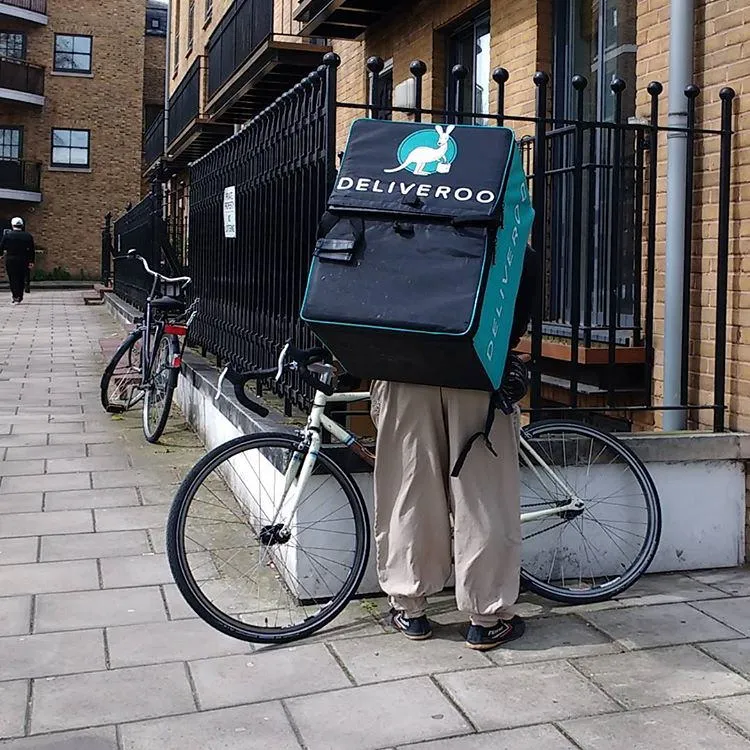
Photo: Môsieur J. [version 9.1] from Rouen, FRANCE, CC BY 2.0, via Wikimedia Commons
At 10.40pm on a wet Tuesday in Leeds, Marcus is doing what he does most winters: reading the road ahead by the way it reflects his headlight. He rides for a living, not for Strava, and he has learned that the shiny patch near the kerb is usually not water. It is either ice or something worse.
Marcus is one of three riders I spoke to for this piece — a courier in Leeds, a food-delivery rider in Bristol and a courier in Glasgow. Their names have been changed, but their experience has not. Between them they cover thousands of winter miles in traffic, in the dark, in weather that most of us can choose to skip. The point is not to turn them into a cautionary tale. It is to listen, because the people who ride for a living often know the winter road better than the rest of us.
The first surfaces to go
Ask any of them where the trouble starts and you get the same answer: it is rarely the main road. It is the estate road, the cut-through, the shaded cycle path, the bridge deck, the painted line, the metal drain cover. The places where cold air sits and water has nowhere to drain.
Marcus is blunt about it. 'The main road is usually fine,' he says. 'It is the bit under the trees, the side road that never gets gritted, the corner where the sun never hits. That is where the bike goes.'
In Bristol, Jess talks about leaf mush and painted cycle lanes. 'The green paint gets slippery in a way you do not expect,' she says. 'And if it has been freezing, the path along the river can be worse than the road beside it. You learn which bits to take wide and which bits to avoid completely.'
In Glasgow, Dan mentions slush that refreezes after the evening rush. 'It is not always black ice in the picture-postcard sense,' he says. 'It is wet-looking road that is actually solid. You feel it through the bars before you see it.'
The transferable lesson for commuters and weekend riders is simple: do not audit your route in daylight and assume it will behave the same after dark. Ride it once in the cold, or at least look at it properly on a frosty morning. Note the bridge decks, the north-facing slopes, the metal covers on corners and the untreated side streets. Then adjust your line before the weather adjusts it for you.
Dress for the wait, not the ride
Club riders tend to think in terms of a steady effort: warm up, settle in, stay warm. Delivery riders think in terms of stops. A courier waiting outside a chip shop for twelve minutes is in a different climate from a commuter doing a straight twenty-minute run. That changes how you layer.
'You do not dress for the ride,' Jess says. 'You dress for the wait. If you are soaked in sweat when you stop, you are cold for the rest of the night.'
Her system is unglamorous: a thin base layer, a fleece or light mid-layer, a windproof shell, a cap under the helmet and two pairs of gloves. Not two pairs at once — one pair on, one pair drying. 'Spare gloves are the best winter upgrade nobody talks about,' she says. 'Wet gloves are worse than no gloves.'
Dan keeps his core warm but his arms and legs slightly cooler. 'You want to be a bit cold for the first five minutes,' he says. 'If you are cosy standing still, you will boil when you start moving.' He carries a lightweight waterproof trouser in his bag rather than wearing it all night, and he avoids cotton next to the skin.
For commuters, the lessons are easy to copy. Leave the jacket on when you stop at lights. Unzip on the climb, zip up on the descent. Keep a dry base layer at work if you can. Carry a spare pair of gloves in the wet months. And do not judge your layering by the first mile — judge it by how you feel when you have been standing at a junction in the wind for five minutes.
The cheap bike that keeps going
None of the riders I spoke to were sentimental about fancy equipment. They were sentimental about reliability.
Marcus runs a second-hand hybrid that cost less than some club riders spend on a wheelset. It has mechanical disc brakes, a simple eight-speed drivetrain, full mudguards and a rack. 'It is not fast,' he says. 'It is just not broken.' He cleans the chain, checks the pads and replaces worn parts before they fail. That is the whole secret.
Jess rides a similar kind of bike: alloy frame, cheap consumables, nothing that needs a laptop to diagnose. 'A fancy bike is not worse,' she says. 'It is just less forgiving if you do not look after it. When you are doing this every night, you want parts you can replace in ten minutes.'
Dan puts it in terms of consequences. 'If my bike stops, I stop earning,' he says. 'So I do not care about the groupset. I care about whether the brakes work when it is freezing and whether the tyres have enough tread to get me through the puddles.'
The lesson for the rest of us is not that expensive bikes are pointless. It is that winter rewards maintenance more than marketing. A simple bike with fresh pads, a clean chain, decent tyres and working lights will often outlast a fancy one that has been left to grind itself to death in the salt.
What club riders can borrow
There is plenty that weekend riders and commuters can take from the courier approach without pretending they do the same job. The first is route knowledge. The second is layering discipline. The third is a willingness to slow down before the corner rather than in it.
Delivery riders also tend to be very good at the unglamorous bits of roadcraft: making themselves visible without blinding anyone, anticipating the van that will pull out, giving parked cars a wide berth and not making sudden moves on wet paint. They ride the road they can see, not the road they hope is there.
And they are, mostly, just people trying to get home. The next time a courier filters past you at a red light or waits outside a takeaway in the rain, remember that they are doing a job that keeps them exposed to the worst of British winter. Their advice is worth more than a lot of the gear reviews we read. Some of it might even keep your own winter miles a bit safer.
SuperByke covers bikes, gear and routes for UK riders. If you have a winter route or a piece of roadcraft worth sharing, we would like to hear it.